MCBs and MCCBs both interrupt electrical current when abnormal conditions occur, but they are designed for different levels of load, fault current and control. Understanding the distinction helps specifiers select protection that suits the circuit rather than choosing only by appearance or ampere rating.
What is an MCB?
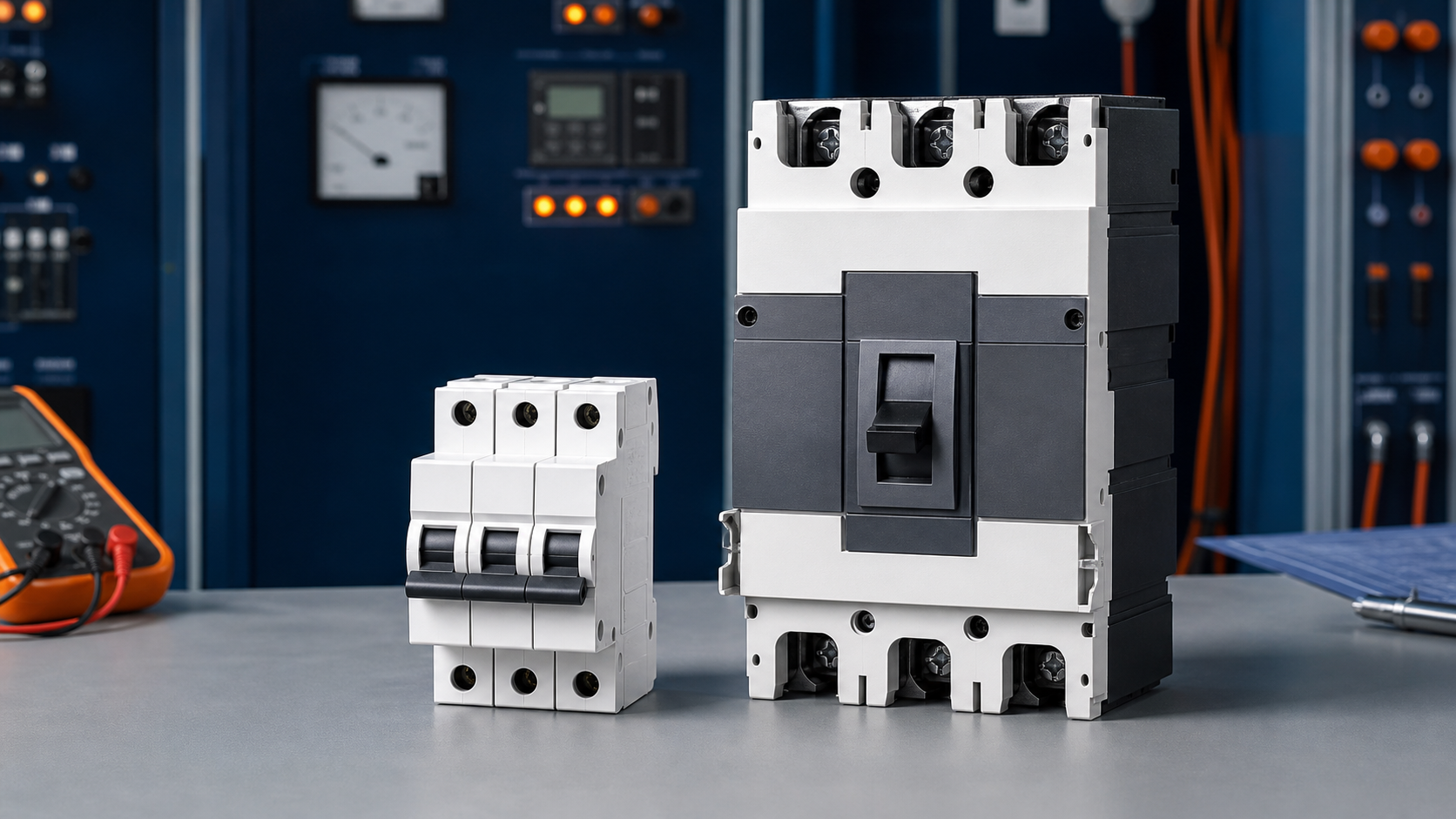
A miniature circuit breaker, or MCB, is commonly used for final circuits and smaller distribution loads. It provides automatic protection against overload and short circuit and can be reset after the cause of a trip has been corrected.
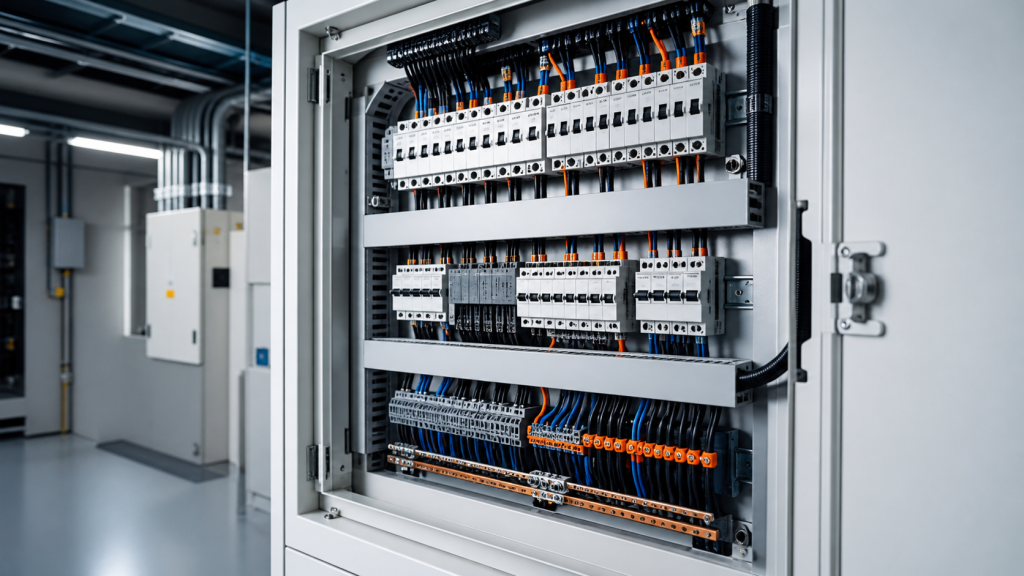
MCBs are compact, modular and suited to distribution boards where multiple outgoing circuits must be arranged efficiently. Typical applications include lighting, socket circuits and smaller equipment, subject to the design requirements of the installation.
What is an MCCB?
A moulded case circuit breaker, or MCCB, is intended for higher-current circuits and applications that may require greater breaking capacity or adjustable protection. MCCBs are often used on incomers, feeders, larger machinery and industrial distribution systems.
Depending on the model, an MCCB may offer adjustable trip settings and accessories for remote operation, auxiliary indication or system integration.
MCB and MCCB: the practical differences
- Current range: MCBs generally serve lower-current final circuits, while MCCBs cover larger feeders and equipment.
- Breaking capacity: MCCBs are available for installations with higher prospective fault levels.
- Trip adjustment: MCB trip characteristics are normally fixed; many MCCBs provide adjustable protection settings.
- Physical size: MCBs are compact modular devices; MCCBs require more panel space.
- Accessories: MCCBs commonly support a wider range of control and indication accessories.
Breaking capacity is critical
The prospective short-circuit current at the point of installation must not exceed the breaker’s rated breaking capacity. This value depends on the supply transformer, system impedance, conductor lengths and other network conditions. It should be calculated by a competent designer.
The correct breaker is not simply the one with the right current rating; it must also interrupt the available fault current safely and coordinate with the rest of the system.
Understand the trip characteristic
Some loads draw brief inrush current during starting. If the breaker characteristic is poorly matched, nuisance tripping may occur; if protection is set too high, the circuit may not receive adequate protection. Motor circuits, transformers, lighting and general-purpose loads can require different coordination decisions.
When an MCB may be appropriate
- Final distribution circuits with modest current demand
- Modular residential, commercial and light-industrial boards
- Applications where fixed protection characteristics meet the design
When an MCCB may be appropriate
- Main incomers and higher-current feeders
- Industrial machinery and distribution panels
- Systems requiring higher breaking capacity
- Projects needing adjustable trip settings or control accessories
Coordinate the entire protection system
Breaker selection should consider cable capacity, load behaviour, discrimination with upstream and downstream devices, earthing arrangements and applicable standards. Tekson’s switchgear range supports varied distribution requirements, while final selection and settings should always be confirmed by a qualified electrical professional.
Read: Distribution Board Safety: A Practical Planning Checklist