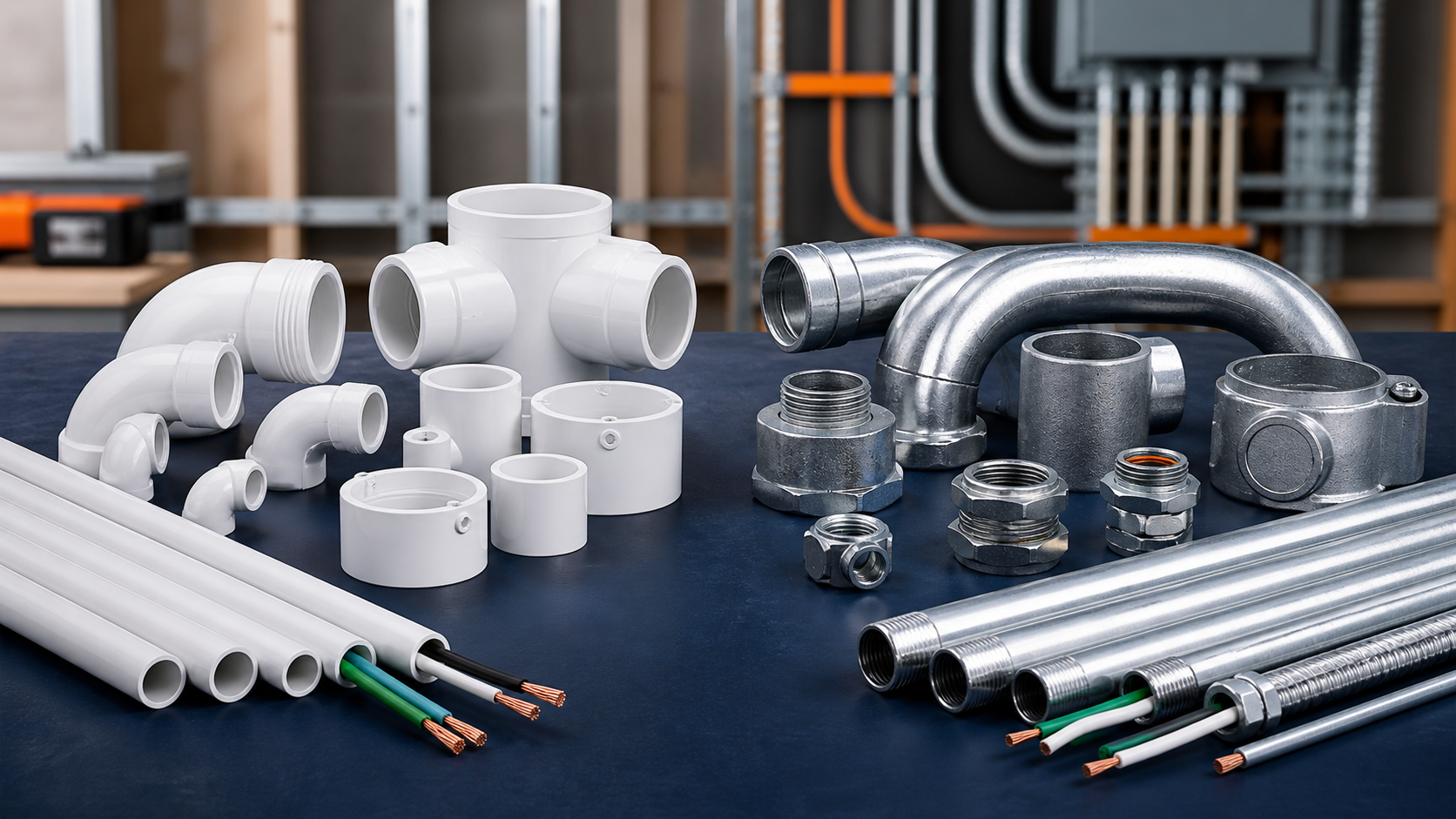
PVC and metal conduit systems both protect and organise electrical wiring, but they respond differently to impact, moisture, corrosion, temperature and earthing requirements. The better choice depends on the installation environment and project specification rather than a single material being universally superior.
Where PVC fittings perform well
PVC fittings are lightweight, corrosion resistant and easy to handle. They are widely used for concealed and surface installations in suitable residential, commercial and light-industrial environments.
- Resistant to rust and many common sources of moisture
- Easy to cut and assemble with compatible fittings
- Electrically non-conductive
- Useful where low weight and straightforward routing are priorities
Where metal fittings perform well
Metal conduit and fittings offer strong mechanical protection and are often selected for workshops, factories, plant rooms and exposed service routes. A properly designed metal system can also form part of the protective bonding arrangement, subject to applicable standards and verified continuity.
- High resistance to impact and crushing
- Suitable for demanding exposed installations
- Provides a robust, professional route for cables
- Available with glands, couplers and accessories for industrial equipment
Compare the installation environment
Moisture, wash-down areas, chemicals, sunlight, vibration and the likelihood of physical damage all affect material choice. PVC may be advantageous in corrosive areas, while metal may be preferred where mechanical impact is the greater risk. Outdoor installations require products specifically suited to UV exposure and weather conditions.
Temperature and fire performance
Every conduit system has temperature and fire-performance limits. The project designer should confirm that the selected material, fittings, adhesive or seals suit the expected operating conditions and the fire strategy of the building.
The quality of the complete conduit route matters more than the material name alone. Correct fittings, secure joints, suitable entries and careful workmanship determine how well the system protects the cable.
Earthing and bonding
PVC is non-conductive and does not provide an earth path. Metal systems require correctly designed continuity and bonding. Threaded joints, couplers, glands and flexible sections must be installed so the protective arrangement remains reliable and testable.
Expansion and movement
PVC can expand and contract noticeably with temperature changes. Long straight runs may need expansion provisions and appropriate support spacing. Metal systems also need secure supports and allowance for vibration or structural movement where applicable.
Choose compatible fittings
Use bends, tees, junction boxes, adaptors and glands that are designed for the selected conduit type and size. Improvised combinations can reduce mechanical strength, compromise environmental sealing and make cable pulling difficult.
Quick selection guide
- Choose PVC when corrosion resistance, low weight and non-conductivity are important and the route is not exposed to severe mechanical damage.
- Choose metal when robust impact protection, industrial durability and a rigid exposed installation are priorities.
- Use a coordinated combination only where approved adaptors and the project’s earthing and sealing requirements are fully addressed.
Specify the complete route
Conduit selection should include every bend, box, coupler, gland, support and entry—not only the straight lengths. Tekson offers PVC and metal fitting solutions for varied electrical installations. A qualified professional should confirm material suitability and installation details for the actual site conditions.