A distribution board is the point at which electrical power is divided, protected and controlled for multiple circuits. Good design is not only about fitting enough breakers into an enclosure. It should support safe operation, clear identification, heat management and straightforward maintenance..
Begin with the correct board type
The enclosure should suit the location, supply arrangement and number of circuits. Indoor commercial areas, workshops and exposed industrial environments can require different levels of mechanical and environmental protection. The board must also provide adequate space for incoming devices, outgoing circuits, neutral and earth termination.
Allow capacity for future circuits
A board filled to its maximum capacity on the first day leaves no practical space for changes. Sensible spare ways and wiring space make later additions safer and less disruptive. Future planning also reduces the temptation to overcrowd devices or force conductors into unsuitable bends.
Keep wiring organised
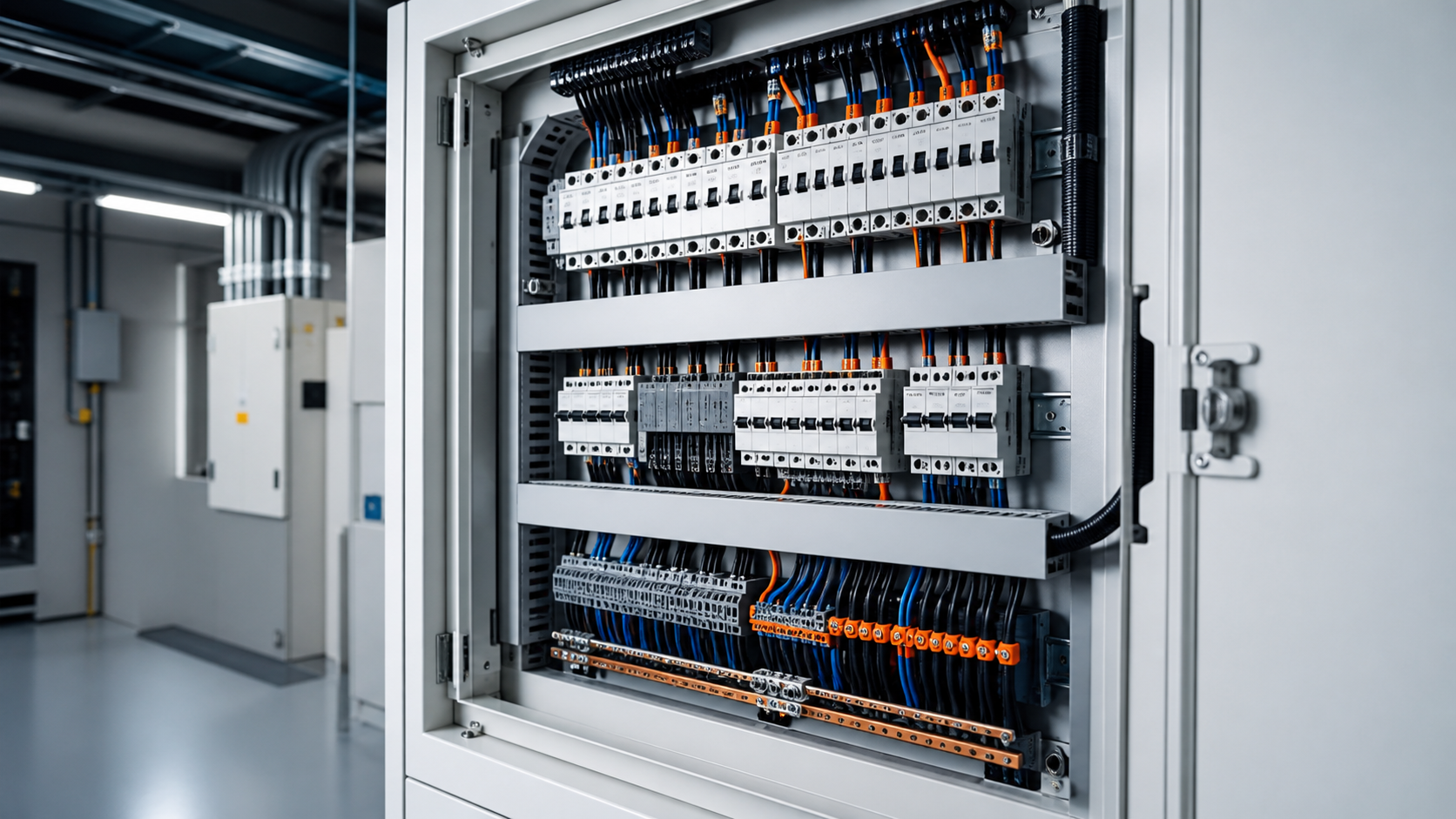
Neat routing makes a board easier to inspect and service. Conductors should be correctly sized, supported and terminated without excessive tension. Power and control wiring should be arranged appropriately, and protective conductors must remain clear and dependable.
- Use the correct conductor size and colour identification.
- Maintain the recommended bending radius.
- Fit suitable glands, bushes and edge protection at cable entries.
- Avoid loose strands and verify termination torque.
Manage heat and grouping
Protective devices and conductors generate heat under load. Overcrowding, poor ventilation and high ambient temperature can affect performance. The design should account for enclosure size, device spacing, load diversity and manufacturer guidance.
A professional distribution board should be understandable at a glance: circuits identified, conductors organised, protective devices coordinated and space available for safe maintenance.
Use clear circuit identification
Every outgoing circuit should have a durable, accurate description. A clear schedule helps operators isolate the correct circuit quickly and reduces risk during maintenance. Labels should be updated whenever the installation changes.
Coordinate protective devices
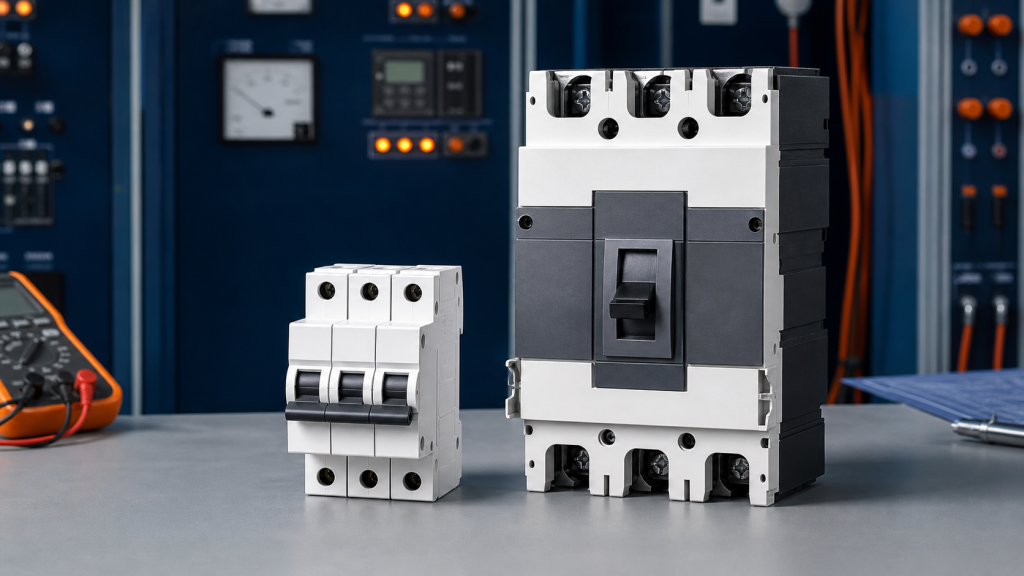
Incoming and outgoing protection must be selected as a system. Device ratings, breaking capacity, trip characteristics and discrimination should align with the connected loads and cable capacities. Where residual-current protection is required, its type and sensitivity must suit the application.
Provide safe access and isolation
The board should be accessible to authorised personnel without being exposed to accidental contact or obstruction. Main isolation must be clearly identified. Covers, blanks and internal barriers should be complete so live parts are not accessible during normal operation.
Inspection and maintenance checklist
- Look for overheating, discoloration or unusual odour.
- Confirm covers, blanks and doors are secure.
- Check circuit schedules and labels.
- Inspect cable entries and mechanical protection.
- Test protective devices at the required intervals.
- Have termination condition and torque checked by qualified personnel.
Build safety into the installation
A well-planned distribution board improves reliability and gives electricians a safer, clearer system to maintain. Tekson provides distribution and protection solutions for commercial and industrial applications. Board design, installation and testing must be carried out by competent professionals in accordance with the applicable standards.
Also Read: PVC vs Metal Conduit Fittings: Which Should You Choose?